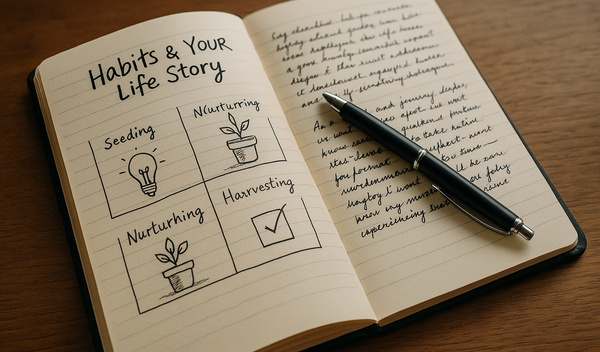
You Don’t Need a Better Habit. You Need a Place to Stand

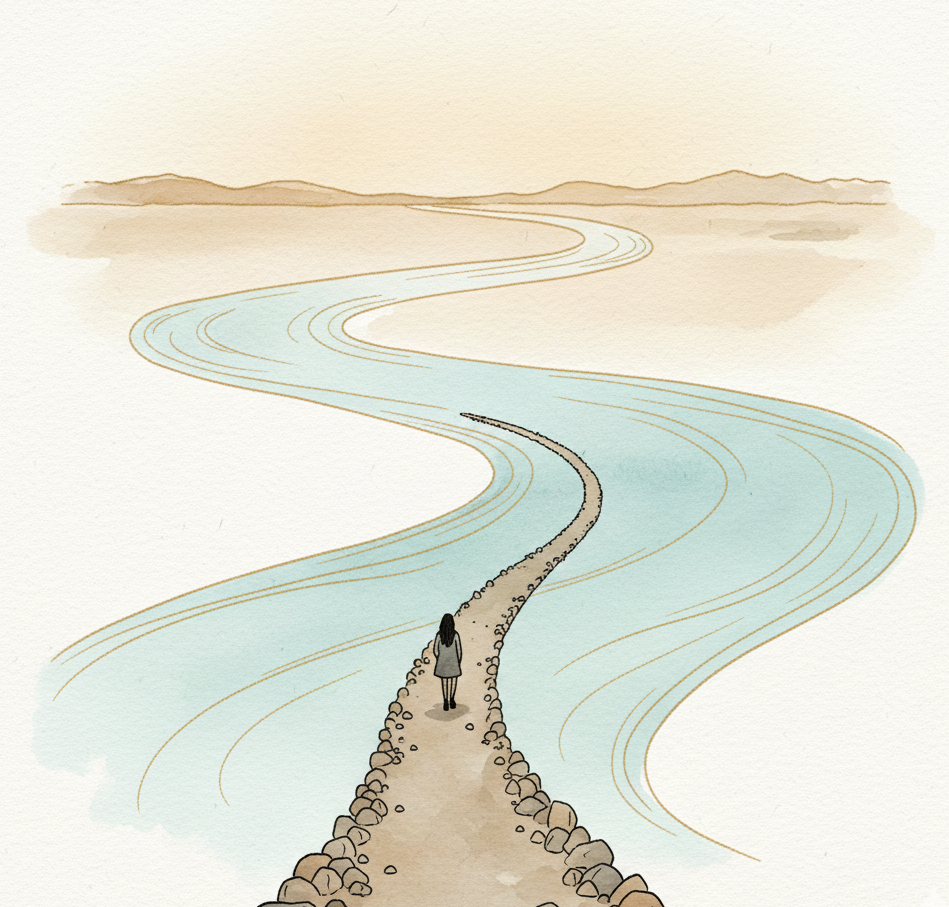
Why aren’t awareness and effort enough? And where does real change begin?
Section 1 — The Quiet Frustration Beneath “Doing the Work”
You’re not new to inner work.
You’ve meditated and reflected.
You’ve learned the language of patterns.
You can often see what’s happening while it’s happening.
And yet, when pressure arrives — a difficult conversation, a decision that matters, a moment of emotional intensity — something familiar takes over.
The same reactions return.
The same hesitations appear.
The same inner retreat, self-doubt, or overthinking loop starts again.
Sometimes it happens so fast you barely notice — until later, when you think:
“I knew better… so why did I still react that way?”
That moment is especially frustrating because it isn’t ignorance.
It’s not a lack of intelligence or care.
You’re aware. You’re trying.
And still, it feels like growth has stalled — or even reversed.
Most people quietly turn this into a personal story:
“I must not be disciplined enough.”
“Maybe I’m avoiding something.”
“If I just tried harder, this wouldn’t keep happening.”
But if you’re honest, that explanation doesn’t quite fit.
Because effort isn’t the problem.
And awareness clearly isn’t missing.
What you’re experiencing isn’t failure.
It’s a signal — one that most people were never taught how to read.
Section 2 — The Subtle Mistake Almost Everyone Makes About Change
Here’s the part most personal growth conversations leave out:
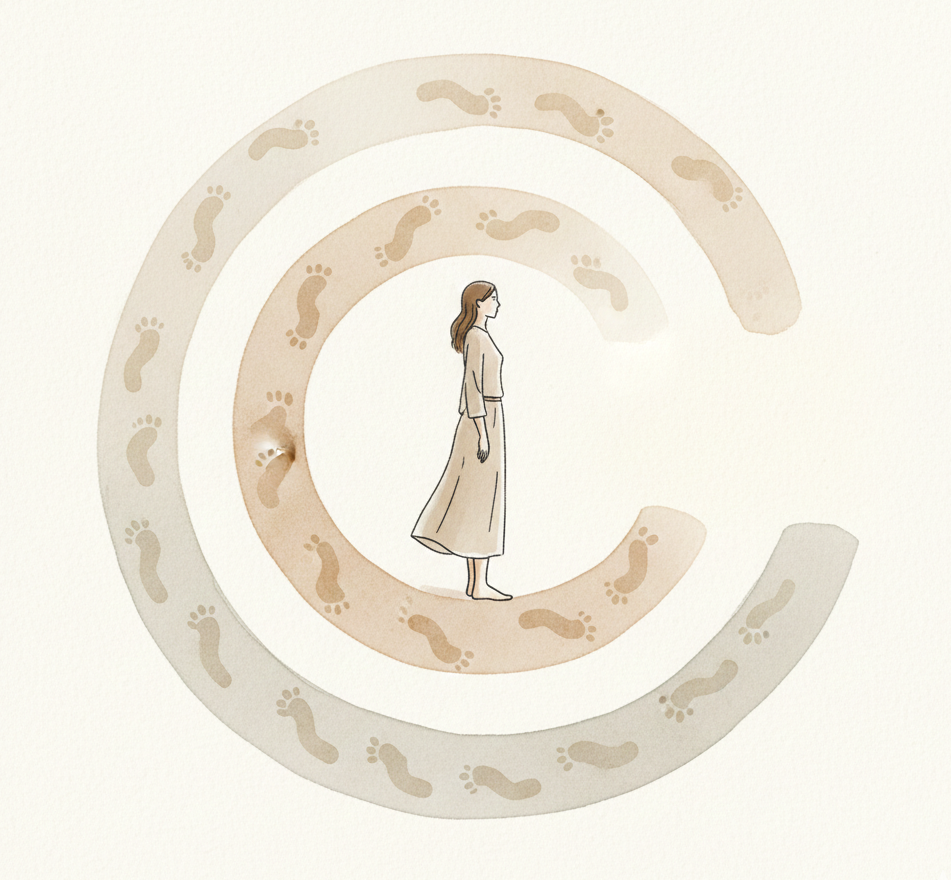
Change isn’t a single move.
It’s not something you decide once and then execute.
Human transformation unfolds through phases, and each phase asks for a different response.
When we apply the wrong kind of effort to the wrong phase, even sincere growth starts to break down.
This is how people end up:
- practicing habits that feel forced
- repeating insights that don’t translate into action
- pushing themselves when what’s actually needed is orientation
From the inside, it sounds like:
“I understand myself better than ever… but I still don’t know how to act.”
“I know what matters… but I don’t stay aligned when it counts.”
This isn’t resistance.
It’s not self-sabotage.
And it’s not a character flaw.
It’s what happens when insight outpaces stability.
Without a stable inner reference point, awareness floats.
Practice becomes heavy.
And under pressure, we default to patterns that once protected us — even when they no longer serve us.
The real question isn’t:
“What’s wrong with me?”
It’s this:
“Where am I in the arc of change — and what does this phase actually require?”
That question changes the entire conversation.

Section 3 — An Ancient Pattern Hidden in Plain Sight
More than 2,500 years ago, the Buddha observed something simple and precise about human change.
Not as a belief system.
Not as a self-improvement method.
But as a description of lived reality.
He noticed that transformation follows a sequence:
First, we recognize what hurts.
Then, we understand why it keeps happening.
Only then does a real path forward become possible — one that can actually be practiced. It’s called “Four Noble Truths”.
What’s remarkable is how closely this ancient observation aligns with what modern psychology and neuroscience now confirm:
Change doesn’t happen through force.
It happens through the right timing.
When we flatten this sequence — treating change as something you either do or don’t do — friction is inevitable.
Section 4 — The Five Phases Most People Move Through (Without Knowing It)
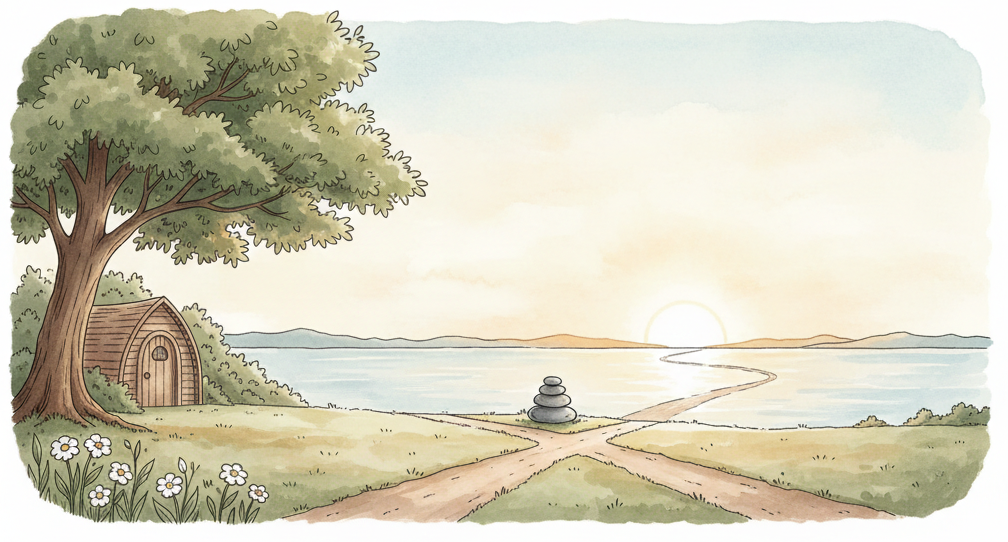
Over time, I’ve seen meaningful transformation move through five distinct phases.
Not conceptually — experientially.
You’ve likely touched all of them at different moments in your life.
1. Safety
The phase where something hurts enough to be noticed.
The pressure here feels like overwhelm, fear, illness, or emotional shutdown.
Nothing needs fixing yet.
The real question is simply: “Can I stay present with what’s happening?”
2. Clarity
Patterns begin to surface.
You start asking:
Why does this keep happening?
What’s underneath this reaction?
What am I missing?
Insight grows — but traction hasn’t arrived yet.
3. Stability
This is the phase most people don’t realize exists — and the one they often skip.
Stability isn’t about feeling calm.
It’s about orientation under pressure.
The pressure here feels like decision fatigue, relational tension, or knowing what matters but freezing anyway.
The quiet question becomes:
“Given who I am, how do I choose — again and again?”
4. Capability
Only after stability do new skills begin to stick.
Practice becomes lighter.
Behavior changes feel more natural.
Daily friction replaces inner chaos.
5. Mastery
What once required effort starts to flow.
Attention turns outward again — toward contribution, leadership, and legacy.
Section 5 — Why Stability Is the Missing Hinge
Most growth systems focus on insight or behavior.
Very few help people stabilize their identity in between.
Without stability:
- insight spins
- effort exhausts
- practice collapses under stress
With stability:
- choices simplify
- consistency emerges
- practice stops feeling like self-correction
This is why so many thoughtful, self-aware people feel stuck.
They don’t need more insight.
They don’t need to try harder.
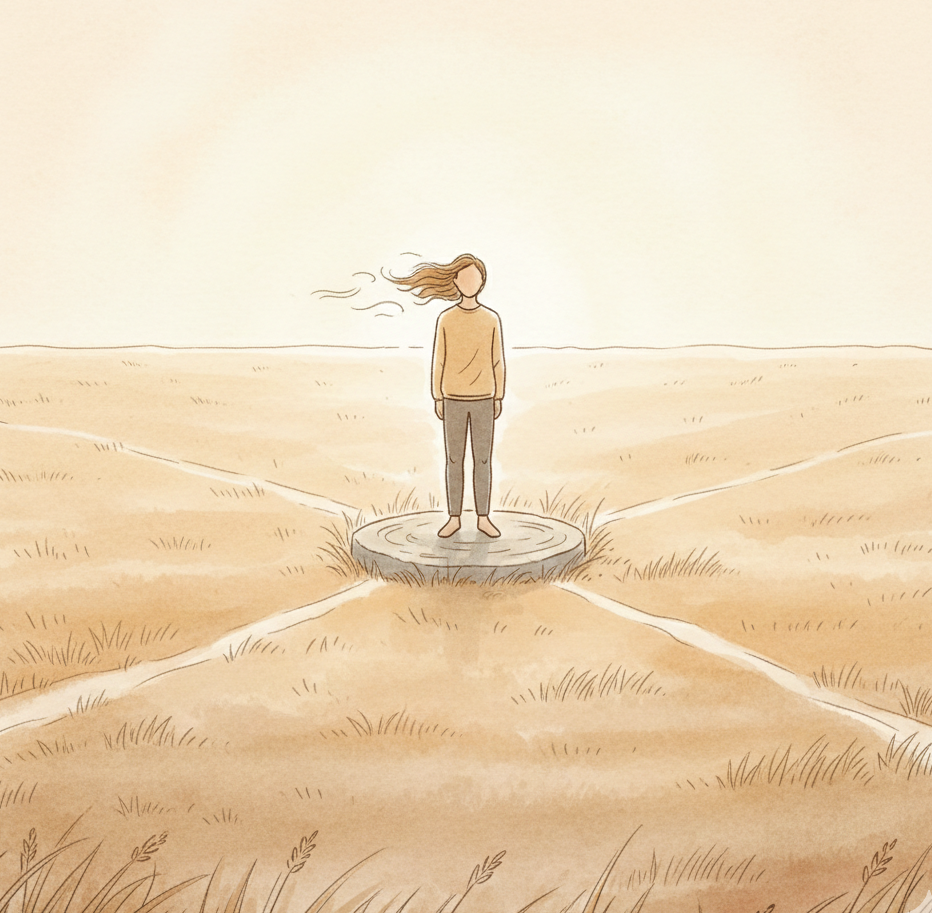
They need a place to stand.
Section 6 — A Gentler Way Forward
If you recognize yourself here, the next step isn’t more effort.
It’s orientation.
Clarifying:
- who you are beneath pressure
- what naturally supports alignment
- what reliably pulls you off-center
Not as labels.
Not as goals.
But as a steady inner reference you can return to.
When orientation is clear, practice stops being a struggle.
And change starts to feel less like fixing —
and more like becoming.
If this perspective resonates, I’ve created a few simple, free tools to help people locate themselves in this arc and explore what stability looks like for them.
No commitment.
No pressure.
Just a clearer place to begin.
👉 If you're interested in our current retreat:
https://www.sacredpath.solutions/the-second-spring-retreat/
and our group work:
https://www.sacredpath.solutions/begin-your-journey-on-the-sacred-path/